
Energy Management
As Data Centers are huge energy consumers, LuxConnect’s engineers are very concerned about the impact on the environment and are constantly on the lookout for new technologies to make the best use of energy. Sustainability is one of LuxConnect’s core values.
All Data Centers are designed and operated to maximize energy efficiency while limiting environmental impact, using green energy.
Strong commitments

LuxConnect Data Center KPIs:
PUE: 1,35 — CUE: 3.2 gCO2e/kWh — WUE: 0,209 l/kWh
Continuous improvement plan for Energy Efficiency supervised by the government agency EnergieAgence
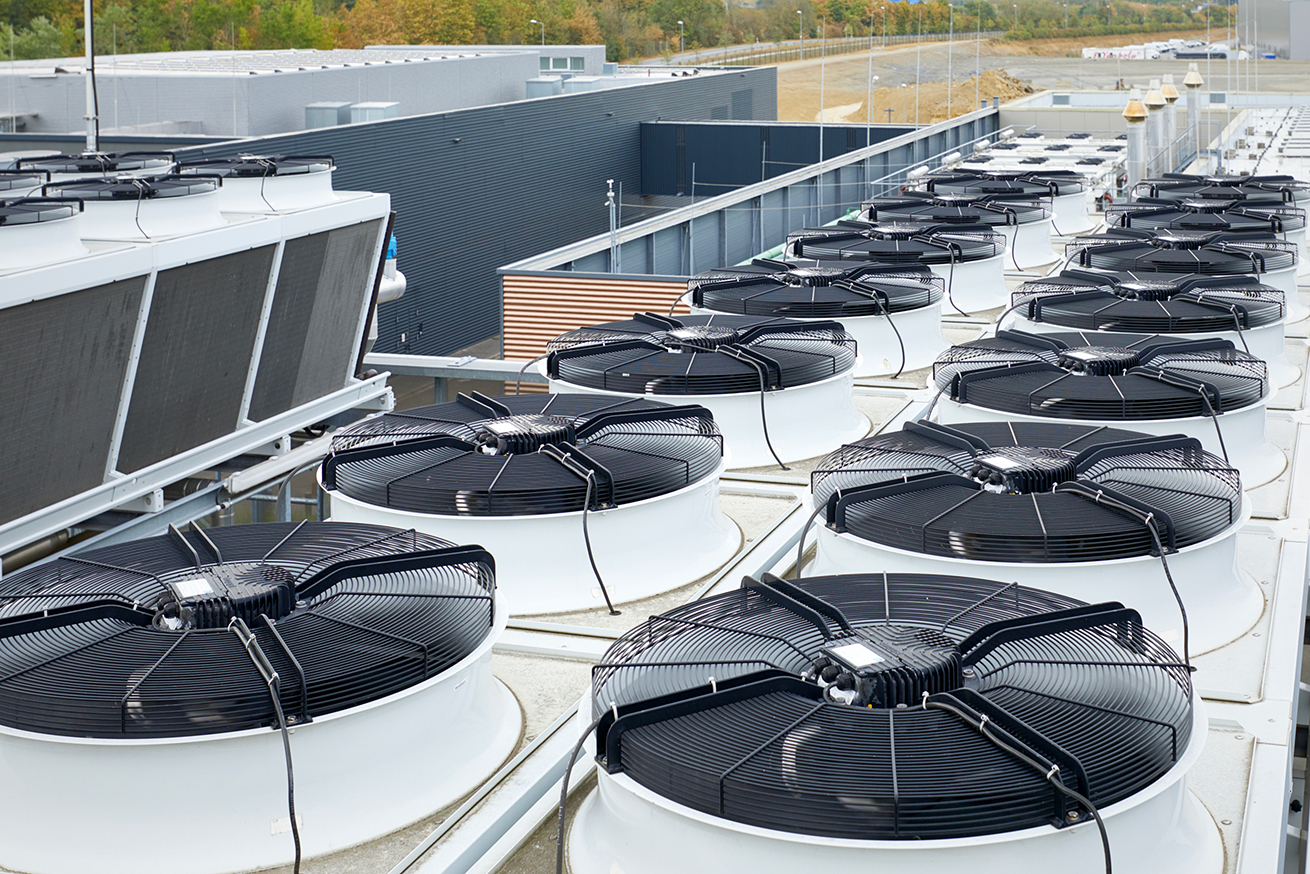
Waste heat from servers used to heat office space and preheat emergency generators
The Uninterrupted Power Supply (UPS) and the transformer infrastructure have been optimized to support variable loads and capacities at the lowest possible energy consumption levels, without impacting Data Center operations.
Power management
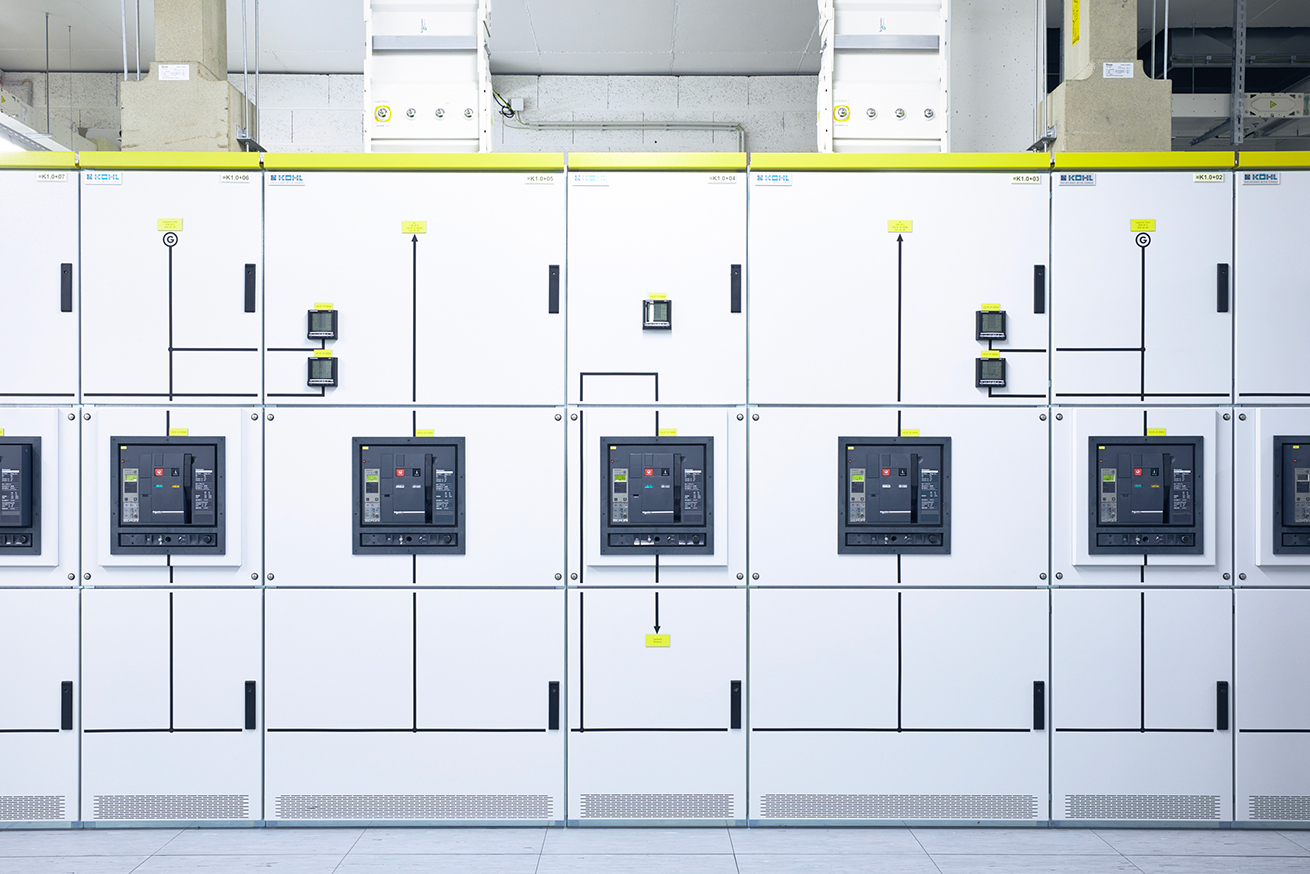
On top of the existing building management system, LuxConnect has installed, in each of its Data Centers, a separate and redundant power management system, which provides continuous monitoring and recording of energy conversion and distribution.
The network monitoring system allows a permanent monitoring of the electrical characteristics of the power generation systems such as transformers, emergency power supply systems, UPS systems as well as the distribution and the energy flow from the low voltage main distribution board and UPS to the customers.
The energy management software can realize a detailed analysis of the power quality, harmonics, waveforms, tensions and currents, energy consumption, PUE, power factor and power failures. Localization of the sources of transients, harmonics, voltage dips (whether external or internal) are displayed on customized views based on real-time information.
So any default in efficiency and/or quality of electrical power can be traced down to the single rack and immediately acted upon.
Cold aisle containment
on your racks
The overall energy consumption of a Data Center largely depends on the energy usage of its customers. To support our clients in adopting a more sustainable approach, we install cold aisle containment (closed cabinets) for all new customers in line with the European Code of Conduct for Data Centers. This setup significantly improves energy efficiency. As a result, a lower PUE is applied to customers using cold aisle containment – for example, in DC2 Bissen, you can benefit from a PUE of 1.30 instead of 1.35.
Kiowatt cooling
At DC2 in Bissen, an integrated energy concept allows the production of cold based on the exceeded heat generated by the Kiowatt trigeneration site.
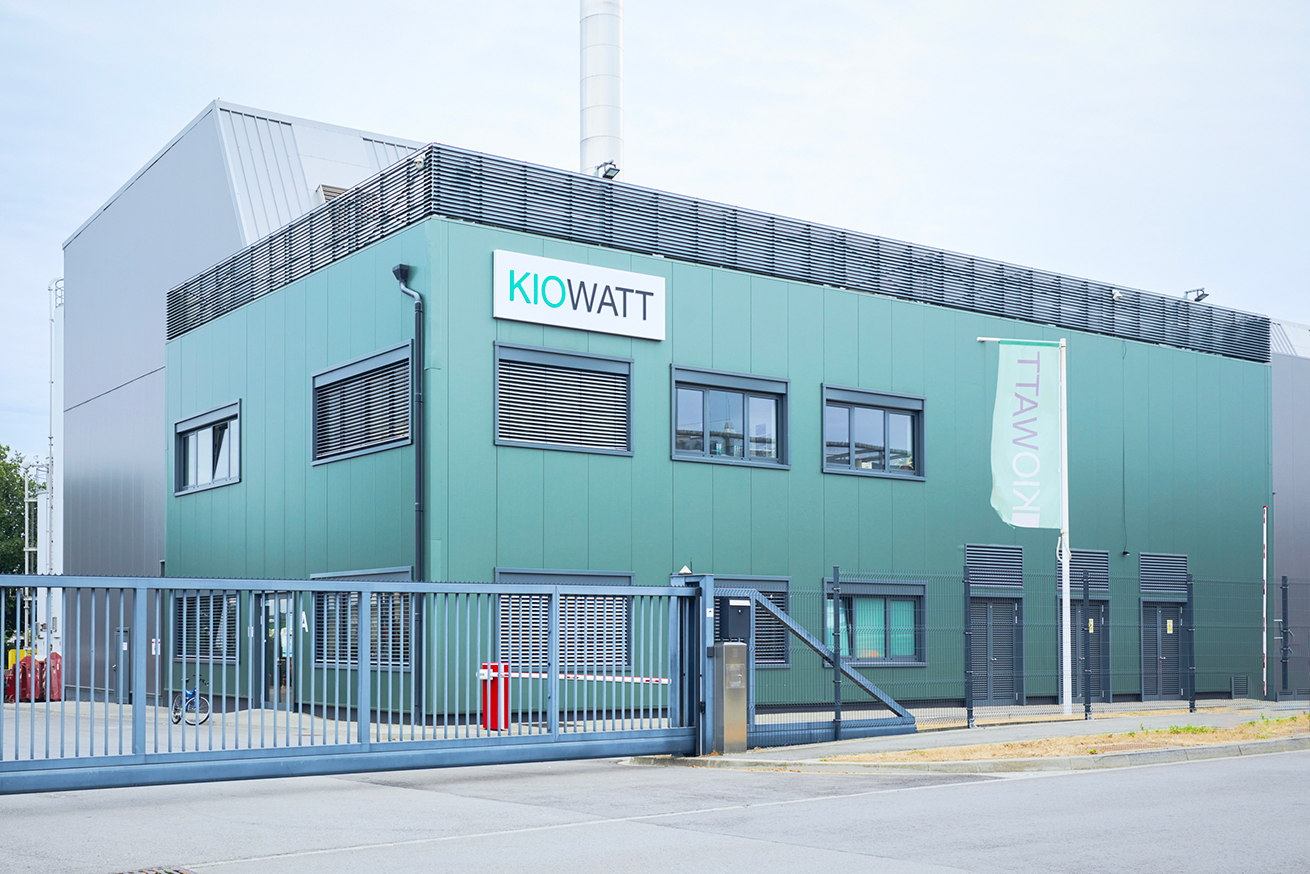
Kiowatt – resulting from the union of LuxEnergie and Groupe François – has been active since October 2013 in the production and distribution of energy from installations using biomass and the production of pellets. This energy efficiency innovation is at the heart of the installation because, using wood waste, it simultaneously produces heat and electrical energy.
How does it work?


The cogeneration plant, located on the other side of the road, burns wood waste (from forests, furniture, industry etc.) to produce electrical energy.


The wood is transported to a boiler where 4 to 5 tons are burned per hour. The combustion heat causes the water contained in the walls of the boiler to evaporate. The flue gases are used to superheat the steam to 420° C.


The steam produced is used to turn the turbine, which produces electricity that is fed into the public grid. The steam is then transferred via a condenser to a secondary network, where the remaining energy is involved in the production of pellets, cooling the Data Center and powering an urban heating network.


As a result, different forms of energy are produced by the cogeneration and each of them enters the LuxConnect production process, reducing Luxembourg’s total CO2 emissions by an estimated 27.000 metric tons / year.


The electricity generated is injected into the power grid of the business area and the public network. It covers the needs of 6.000 households.


The heat generated by the steam turbine, normally released into the atmosphere, is used as follows:
5% is turned into the heat network of the artisanal and business zone Klengbousbierg
30% is used to dry the fresh wood for pellet production. Every year 35.000 tons of pellets are produced, which is equivalent to the consumption of 7.500 households i.e. 1.000.000 litres of fuel.
65% of the heat produced in the cogeneration plant is used by DataCenterEnergie (joint venture between LuxEnergie and LuxConnect) to cool LuxConnect’s Data Center, located on the opposite side of the road. Producing cold with heat is possible thanks to two absorption chillers which are fed by superheated water from the cogeneration plant. The cold water is then transported via an underground network to the Data Center.
If you count the production of electricity, heat, cold and pellets, Kiowatt could even be described as quadri-generation site. Through its social, economic and ecological components, this project greatly benefits both people and the ecological environment. Kiowatt marks a major step in Luxembourg’s energy transition.